After breast cancer surgery: Caring for your body and emotions in your first days of recovery
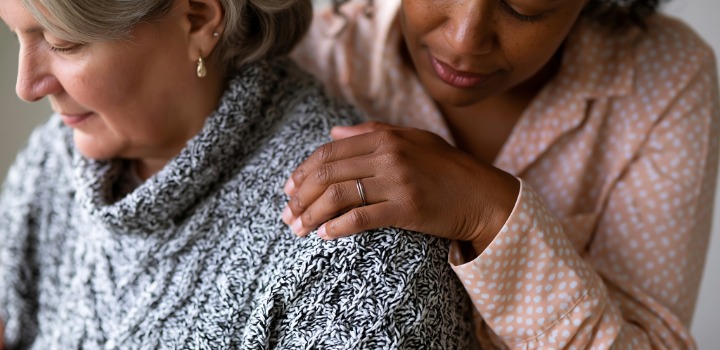
This supportive guide offers compassionate, evidence-informed advice to help you navigate the first few days of recovery after breast surgery performed as part of cancer treatment. It should be read together with the specific discharge instructions from your own surgeon and healthcare team.
The first few days after surgery: rest, recover, and breathe
In the first few days following breast surgery, you may feel physically weak and uncomfortable, with pain, tightness or stiffness in your chest, underarm, shoulder or arm. Emotionally, you might be in shock that this has happened, and you may feel waves of sadness, fear and relief all at once. All these feelings are normal, and you are not alone.
"Recovery after breast cancer surgery is never only about the wound," says Professor Carol Benn, Specialist Breast Surgeon and Breast Disease Specialist. "You may still be processing the diagnosis, the change to your body, and the uncertainty of what may come next. You deserve care, compassion and understanding during this time."
In these early days, your top priority is to rest, recover and follow the plan given to you by your healthcare team. Your wound will take time to heal - often a few weeks - and your recovery will depend on the exact operation you had. Give yourself permission to pause. Take pain medicine exactly as prescribed to stay comfortable and lean on help from loved ones for everyday tasks so that you can conserve your energy for healing. Some specialist breast surgery facilities have a pre- and post-surgery rehabilitation team that you can make use of to aid your recovery.
It's normal to feel very tired. Listen to your body and sleep whenever you need to. Even simple activities like showering or getting dressed can feel exhausting right now, so go slowly and avoid any heavy lifting or strenuous activity until your doctor advises it's safe. Allow the people around you to help with practical tasks like meals, transport, childcare, shopping and household tasks. This period is about allowing your body to heal.
Small acts of self-care can help: listening to music, journalling, gentle breathing, prayer or meditation. If feelings of sadness, anxiety or panic don't ease with time, or you feel you can't cope, let your doctor know. Additional support can be life-changing.
Gentle movement and physical comfort
While rest is essential, gentle movement can also support your recovery when your care team says it's appropriate. Short, slow walks around your home can help circulation and reduce stiffness. Always protect your incision and carefully follow the instructions your surgeon gave you for caring for dressings, wounds or surgical drains.
"The aim in the first days back home is not to be brave; it is to be safe," says Prof Benn. "Rest matters, but so does good pain control and asking your healthcare team if something doesn't feel right."
"If you have gone home with a drain, keep it secure and carefully follow the instructions you were given on emptying, measuring and recording the fluid. Contact your healthcare team if the drain falls out, stops draining when it should be draining, leaks persistently, fills much faster than expected, or if the fluid suddenly becomes bright red, cloudy or foul-smelling."
Your arm and shoulder on the side of surgery may feel tight or unfamiliar. Your healthcare team may give you gentle arm and shoulder exercises at the right time to help restore movement. These movements should never be forced.
"A mild stretching feeling is normal, but stop and ask for advice if you feel sharp pain or develop increased swelling and wound pulling, says Prof Benn.
Ensure you're comfortable: Use pillows to support your arm and chest when sitting or sleeping, and wear loose, soft clothing that's easy to put on. Front-opening tops and soft post-surgery bras or garments recommended by your healthcare team are often more comfortable in the early days.
"Contact your surgeon, breast care nurse or healthcare team immediately if you develop fever or chills, worsening pain, spreading redness, warmth around the wound, bleeding, the wound opening, fluid or pus from the wound, sudden swelling under the arm or around the chest, new swelling of the arm or hand, or anything that does not feel right," advises Prof Benn. "Seek urgent help for shortness of breath, chest pain, fainting, or pain and swelling in your calf."
"Don't be afraid to ask for 'help'."
Prof Benn shares this 'HELP' acronym with her breast cancer surgery patients:
"H - Healing takes time
E - Emotions are normal
L - Love yourself always. This diagnosis is not your fault.
P - Patience - in time you will find your new you."
Nourishing your body
Eating well may feel difficult at first. A reduced appetite, nausea, constipation or fatigue can occur after surgery, anaesthetic and pain medicine. Start with small, frequent meals and focus on hydration. Soups, smoothies, fruit and protein-rich snacks may be easier to manage than full meals.
Your body needs protein to heal, so foods like eggs, yoghurt, beans, fish or protein-enriched drinks can be helpful. If friends or family ask how they can support you, allowing them to help with meals can take pressure off you during this early recovery phase.
Let your healthcare team know if you cannot keep fluids down, are not eating, are constipated, or if you are continuously nauseous.
Take recovery one day at a time
There is no single "right" way to feel or recover after breast cancer surgery. Some days may feel more manageable than others, and it is okay to take things slowly. Your body and emotions have both been through a great deal, so give yourself the same care, patience and kindness you would offer someone you love.
"Some women recover quickly while others take longer, especially after more extensive surgery, lymph node surgery, reconstruction or complications," says Prof Benn. "Waiting for final pathology results and for next treatment steps can be stressful."
"I tell all my patients to 'take one day at a time' after breast surgery. Embracing this way of life is often the best way to recover and indeed, to live."
For now, focus on the next small step: resting when you need to, accepting help when it is offered, taking medicine as prescribed, going to follow up appointments, and following the guidance of your healthcare team. Give yourself time to heal. You do not have to have all the answers or feel strong every day.
Stay connected to the people and your healthcare professionals who support you, and reach out if something does not feel right physically or emotionally. With time, care and support, you can take each day as it comes.