/discoverycoza/content-hub/vitality/2025/sleep-benefit
Why good sleep health matters
Discover why sleep is one of the most powerful predictors of overall health and learn how to track and improve your sleep.
Learn how to sleep better
Good sleep starts with getting at least seven hours a night and going to bed at the same time every day. While some aspects of sleep are beyond your control, your daily behaviours play a significant role in shaping how well you sleep.
How do I improve my sleep
Getting a good night's sleep starts with what you do during the day. Your routines, lifestyle choices, and environment all influence your ability to rest well at night. These habits, when consistently practised and optimised, are known as sleep hygiene. They help prevent fatigue, daytime sleepiness and poor sleep quality.
While lifestyle factors are the most common and changeable obstacles to good sleep, medical conditions such as pain, reflux, asthma, or sleep disorders like sleep apnoea and insomnia can also interfere with sleep. Age-related changes may play a role too. In these cases, professional assessment and tailored management are often needed alongside good sleep hygiene.
Disclaimer: If you're consistently practising healthy sleep habits but still struggle with poor sleep duration and quality, consider speaking to a healthcare professional.
Evidence-based strategies for enhanced sleep

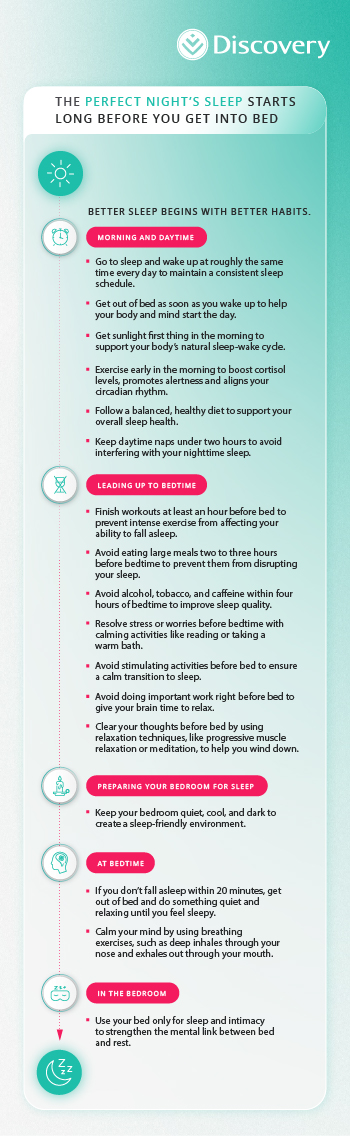
What you need to know
The relationship between sleep and health is bi-directional, meaning that they influence each other. Poor sleep can increase the risk of developing physical and/or mental health conditions, while poor physical and mental health can negatively impact sleep quality and duration.
For example, sleep disorders like obstructive sleep apnoea are more common in people living with obesity. At the same time, poor sleep can also lead to weight gain by increasing hunger hormones which can lead to overeating and reduce motivation to be physically active.
Similarly, a well-established bi-directional relationship exists between sleep and mental health. Symptoms of depression and anxiety, such as having a low mood or excessive worrying, can disturb our sleep and contribute to tiredness. Likewise, consistently sleeping poorly can worsen depression and anxiety symptoms by increasing tiredness and disrupting our mood and brain function.
Sleep is guided by two biological systems: your body clock (also called the circadian rhythm) and sleep-wake homeostasis (the natural pressure to sleep that builds the longer you're awake).
- Your circadian rhythm is controlled by your brain and responds to light and darkness. In the morning, sunlight tells your body to stop making melatonin (a hormone that makes you sleepy) so you feel awake. At night, darkness signals your body to make more melatonin, helping you get ready for sleep. Disruptions like screen exposure at night or going to sleep at different times each night can throw this rhythm off.
- Sleep-wake homeostasis builds sleep pressure (the need to go to sleep) the longer you are awake. This is driven by a chemical called adenosine, which builds up in our bodies during the day and increases sleepiness. Caffeine blocks the function of adenosine, which is why it can interfere with sleep.
As you fall asleep, your core body temperature drops, and brain activity slows. These changes allow you to transition into a calm sleep state.
In short, we fall asleep when our body clock and sleep pressure align, and our behaviours support this process. So as you prepare to go to sleep, dim the lights, cool your room, pack away your devices and initiate a calming routine.
Sleep and nutrition are closely linked. Poor sleep affects your hunger hormones. When you do not get enough sleep, it can lead to overeating and cravings for high-calorie foods. People who sleep less tend to consume more calories and are more likely to gain weight.
Good-quality sleep supports better food choices. When you are well-rested, your body regulates hunger more effectively, making it easier to avoid late-night snacking and choose healthier meals.
What you eat also affects how you sleep. Heavy meals, spicy foods, caffeine, and alcohol close to bedtime can disrupt sleep. It is best to finish eating at least two to three hours before bed and avoid stimulants in the evening.
The most common sleep disorders are insomnia and obstructive sleep apnoea. Alongside poor sleep health, the prevalence of sleep disorders is rising globally and locally, presenting a significant health challenge.
Insomnia is a sleep disorder where a person may have consistent trouble falling asleep, staying asleep, or returning to sleep (for at least 3 months), despite having enough time available and a healthy sleeping environment. Having insomnia results in non-restorative, poor quality sleep which leads to daytime sleepiness and functional impairments.
Obstructive sleep apnoea is a sleep disorder characterised by repeated episodes of collapse of the upper airway during sleep, leading to brief awakenings and drops in oxygen levels. This results in fragmented sleep and excessive daytime sleepiness.