It's difficult to improve what you don't measure: How tracking sleep leads to better sleep health
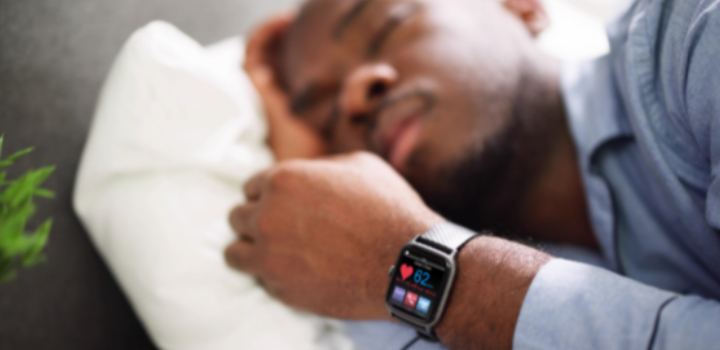
Sleep is one of the most important health behaviours we have, but many people still do not measure it.
In a culture that celebrates and rewards intense productivity, sleep is often the first thing we sacrifice. Yet, it is also the very thing our bodies rely on to function at their best. For many people, tiredness has become so familiar that it no longer feels like a warning sign.
Discovery's latest sleep research shows just how much sleep affects our long-term wellbeing. Poor or irregular sleep raises the risk of chronic conditions, anxiety and depression symptoms, and even car accidents. One in two Vitality members have at least one sleep metric out of range, and one in five have two or more, but most people don't know this unless they're tracking their sleep.
The good news? Measuring your sleep is one of the simplest and most effective steps toward improving how you feel, perform, and function every day.
Why measurement matters
Sleep isn't only about how many hours you're in bed. It's made up of four key parts:
- Duration (how long you sleep)
- Regularity (how consistent your bedtime and wake up times are)
- Quality (how much deep and REM sleep you get)
- Timing (when you sleep and how well it matches your body's internal clock)
Together, these four key parts influence everything from your immune function to mood, memory, appetite, and long-term disease risk. Without tracking them, it's very difficult to know what's working and what needs attention.
"Good sleep is one of the most powerful forms of preventative healthcare we have," says Dr Mosima Mabunda, Vitality's Chief Clinical Officer. "Measurement helps people unlock that power. The moment you start tracking your sleep, you begin the journey toward understanding it, improving it, and ultimately protecting your long term health."
READ MORE | Understanding the three main stages of sleep
Modern wearables can show patterns you wouldn't notice on your own, such as interrupted sleep, irregular sleep routines, and/or limited deep sleep. Discovery's data shows that improving sleep duration and regularity can lower your risk of early death by 24%. This begins with knowing how you sleep now.
Measurement enables precision
Technology gives you guidance based on the way you sleep, and this is part of why Discovery is adding sleep into Vitality, Personal Health Pathways, and Vitality Drive. When your sleep is measured, it becomes easier to make small changes that help.
Discovery's analysis shows that insufficient sleep is associated with:
- a 65% higher risk of diabetes,
- a 41% higher risk of obesity,
- a 33% higher risk of coronary heart disease, and
- a 20% higher risk of depression symptoms.
Sleep also helps you stay safe on the road. Enough sleep lowers the chance of a car accident by 32%, and steady sleep times lower it by 36%.
READ MORE | 8 ways to sleep better naturally
When you pay attention to the way you sleep, you can make small and simple changes that help you feel better each day.
The rise of personalised sleep technology
Today's wearables, from smartwatches to smart rings, have transformed how we understand sleep. Devices like the Oura Ring 4 track how long you sleep, your sleep stages, your heart rate patterns, your body temperature, and how steady your sleep times are.
The Oura Ring 4 is part of a growing group of devices that give clear and useful sleep information. These insights support healthy habits, which is a key part of Vitality's sleep strategy and the upcoming Vitality Sleep Score.
The best ways to measure sleep
- Clinical Sleep Study (Polysomnography, PSG)
- Measures brain waves, breathing, muscle activity, oxygen levels
- Best for diagnosing sleep disorders
- Accurate but expensive and not suitable for daily tracking
- Wearable devices (smart rings, watches, fitness bands)
- Provide estimates of sleep duration, regularity, REM and deep sleep
- Suitable for long-term, real-world monitoring
- Enable habit formation through daily feedback
- Smartphone based sleep tracking
- Uses your phone's built-in sensors to estimate sleep
- Useful as an entry-level option
- Less accurate than dedicated wearables
As we mark World Sleep Day, this is a good moment to look at the hours that shape your waking life. When you measure your sleep, you understand it better. When you understand it better, you can improve it.
Better measurement leads to better sleep. Better sleep supports a healthier, happier, longer life.